Illustrative stock photography · not a client project
The operating challenge
Move mail without losing conversations
A company rebrands but must keep receiving correspondence sent to its historical addresses. The team needs new mailboxes, forwarding that avoids loops, migrated records and successful replies using the new identity.
We inventory users, aliases, mailbox sizes, access rights, applications and DNS records. Cutover timing is agreed before editing MX records, with separate tests for SPF, DKIM, DMARC and forwarding.
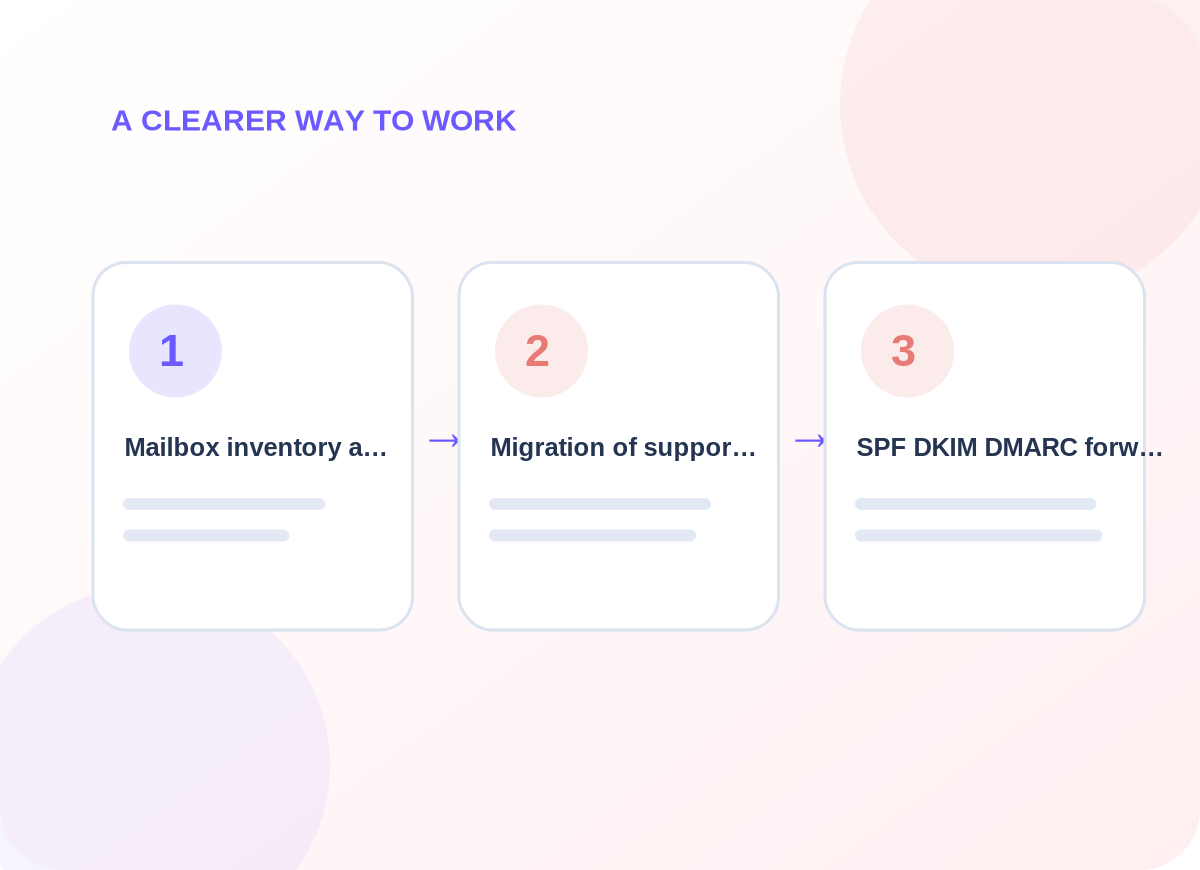
Conceptual delivery stages tailored during discovery
What is included
Authentication, forwarding and replies all matter
Choose the capabilities that matter to your business. The final quote identifies which systems, channels and ongoing tasks are in scope.
01
Mailbox inventory, aliases, shared inbox and sender-identity planning
The first design review identifies the information needed for mailbox inventory, aliases, shared inbox and sender-identity planning. That decision affects customer-facing wording, who maintains the information, and how a person recognizes an incomplete request. We agree examples before implementing a live workflow.
02
Migration of supported email data and careful cutover of MX and authentication records
For migration of supported email data and careful cutover of mx and authentication records, provider access and existing data are inspected before a connection is promised. We document what is read, what may change, and how a failure reaches the responsible person. The resulting process should make sense even without its diagram.
03
SPF, DKIM, DMARC, forwarding, bounce handling and two-way mail tests
With spf, dkim, dmarc, forwarding, bounce handling and two-way mail tests, we agree a useful acceptance check and record what happens when expected information is missing. The handover explains how to review the result and who should respond to unusual cases rather than leaving them in an anonymous queue.
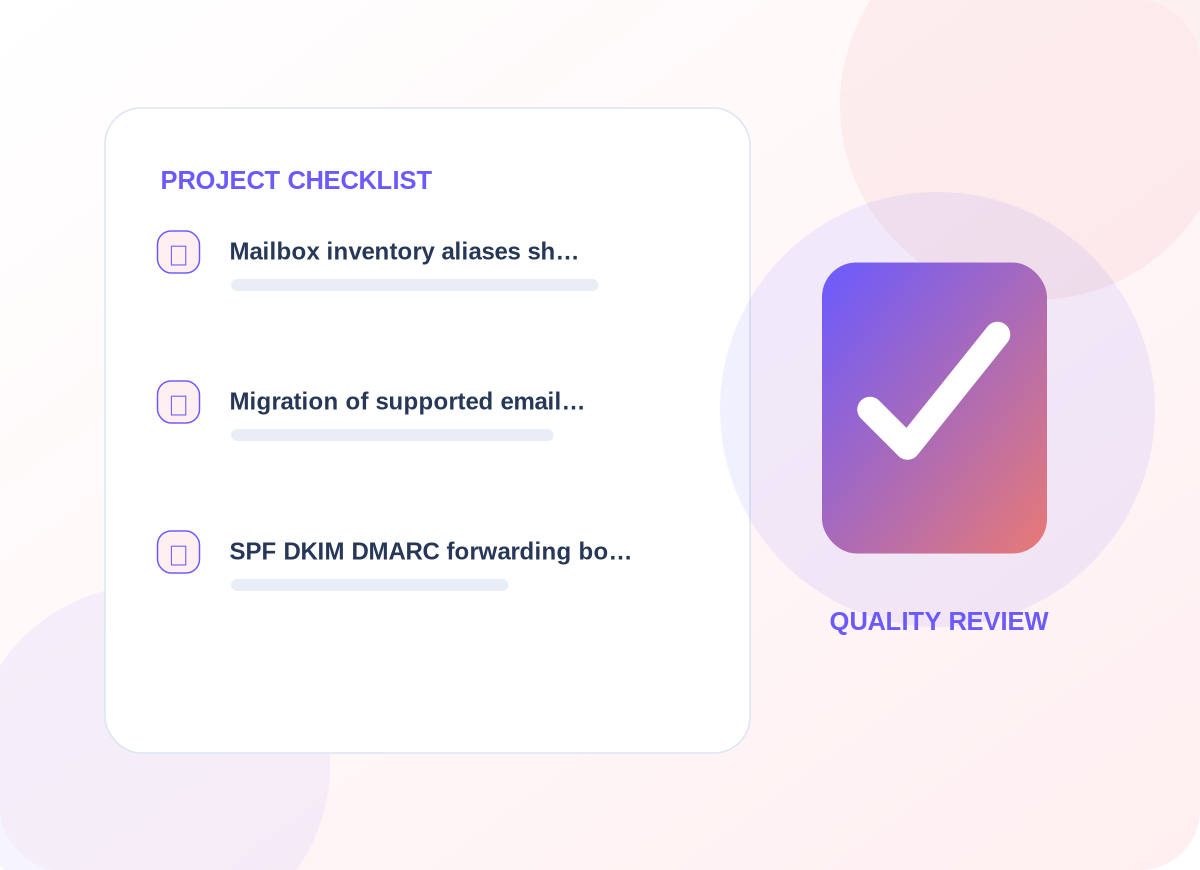
Project details are confirmed before delivery
How we work
A safe cutover has evidence
Spam filtering, DNS propagation, device sync and third-party senders are treated as separate checks; never disable the legacy mailbox before verifying delivery.
01
Explore the current setup
We start by asking the right people to explain their existing process and exceptions. The immediate work is to document addresses, mailbox sizes, access rights, devices and current DNS records. We agree who can approve changes and which user or customer interactions cannot be disrupted.
02
Design and prepare
Once the scope is clear, the delivery team works to prepare destination accounts and migration methods without prematurely changing production routing. Existing permissions and provider limitations are checked; any dependency not available is called out before launch instead of being presented as completed.
03
Verify before handover
Before the service is accepted, we plan to send test messages both ways, verify authentication and monitor old-address forwarding. We document issues found in realistic scenarios and leave clear instructions for requesting changes or escalating unresolved work.
What you can expect
Practical deliverables, not a vague promise
A mailbox inventory, DNS change plan, migration checklist, test evidence and clear guidance for staff changing devices or reply identities.
Email authentication improves trust signals, but no provider can guarantee every message reaches the inbox.
We also discuss how to observe progress using missing messages, sender authentication results, forwarding duplicates and reply routing. Those are useful review points for the agreed engagement, not claims about results that have already been achieved.
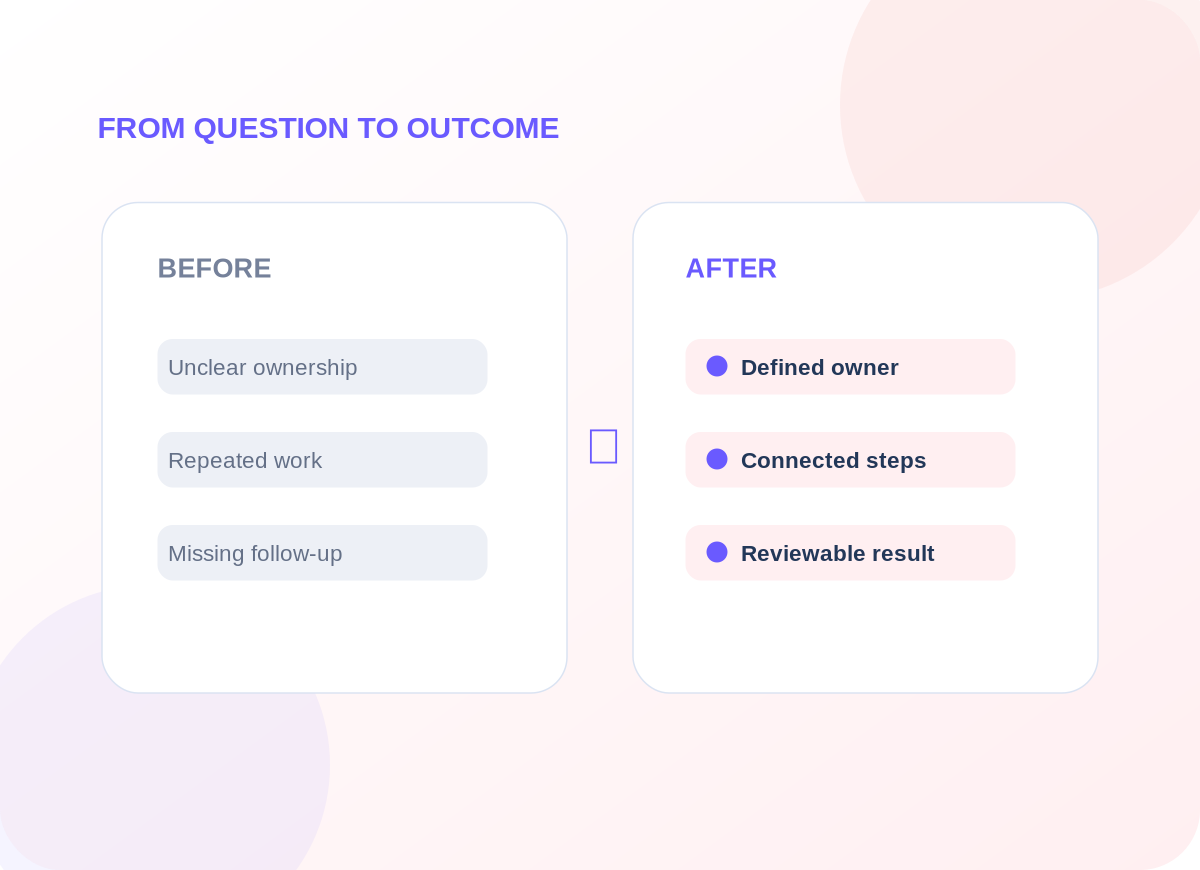
Example operational improvements to consider
Common questions
Questions worth answering before you begin
Will the old email addresses continue working?
Yes, if the old domain and mail services are kept active as planned. We test aliases, forwarding, replies and local-copy behavior where supported.
Does SPF/DKIM/DMARC guarantee inbox placement?
No. These records authenticate senders and influence trust, but providers also use reputation, content, recipient behavior and proprietary filtering.
Start with a conversation
Let’s discuss your business email setup & migration project.
Tell us about the tools you use, the work that needs improving and the constraints we should respect. We will recommend an appropriate first step.