Scope and build software designed around a specific business process. Built for businesses needing software designed for a particular process.
Off-the-shelf tools can be excellent until a business depends on exceptions, unusual approval paths or data that cannot be represented cleanly in standard fields.
Illustrative stock photography · not a client project
Why the details matter
Software that fits the process
A distributor wants to track purchase requests, approval limits and warehouse dispatch events in one system. Every department needs a different view of the same approved record, without copying data by hand.
We turn operational rules into a feature backlog, define the first usable release, select a sensible architecture and agree how integrations and permissions will be handled.
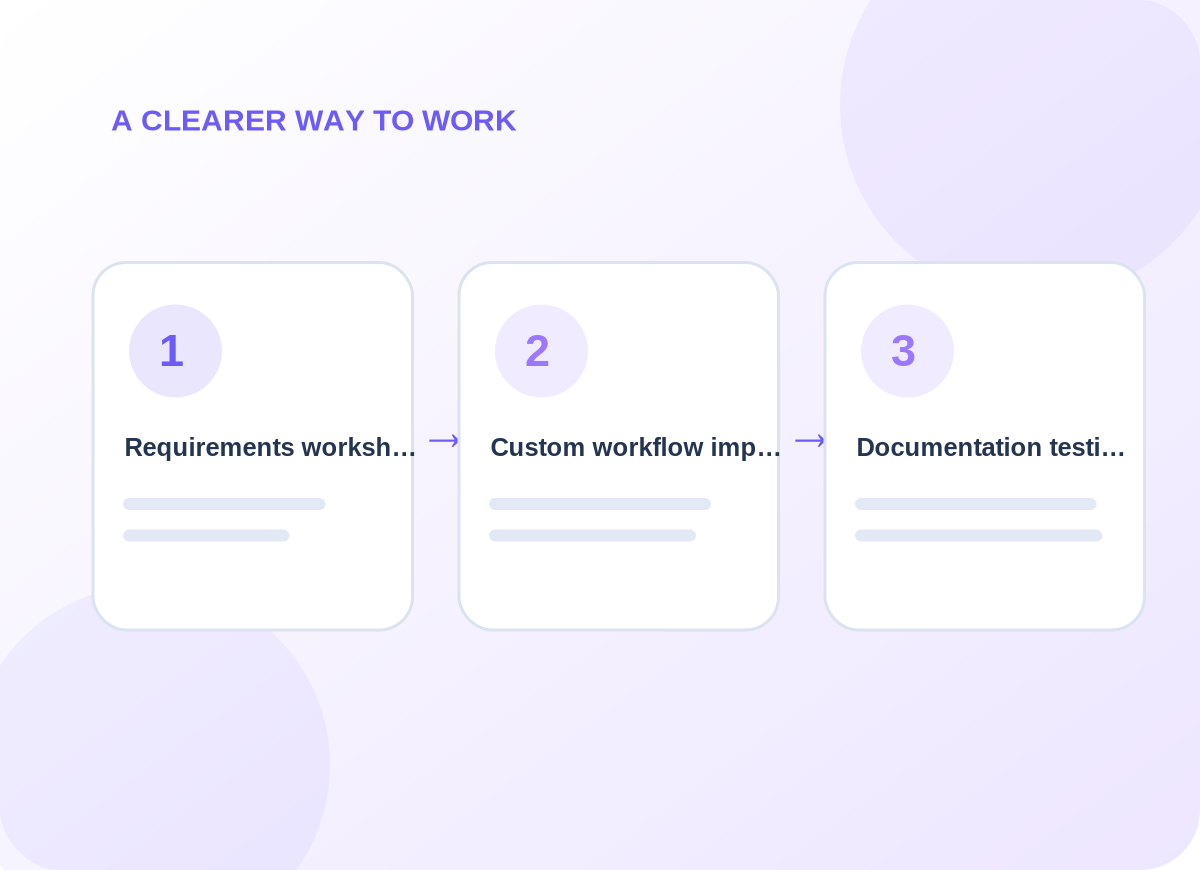
Conceptual delivery stages tailored during discovery
What is included
Prioritize the first complete workflow
Choose the capabilities that matter to your business. The final quote identifies which systems, channels and ongoing tasks are in scope.
01
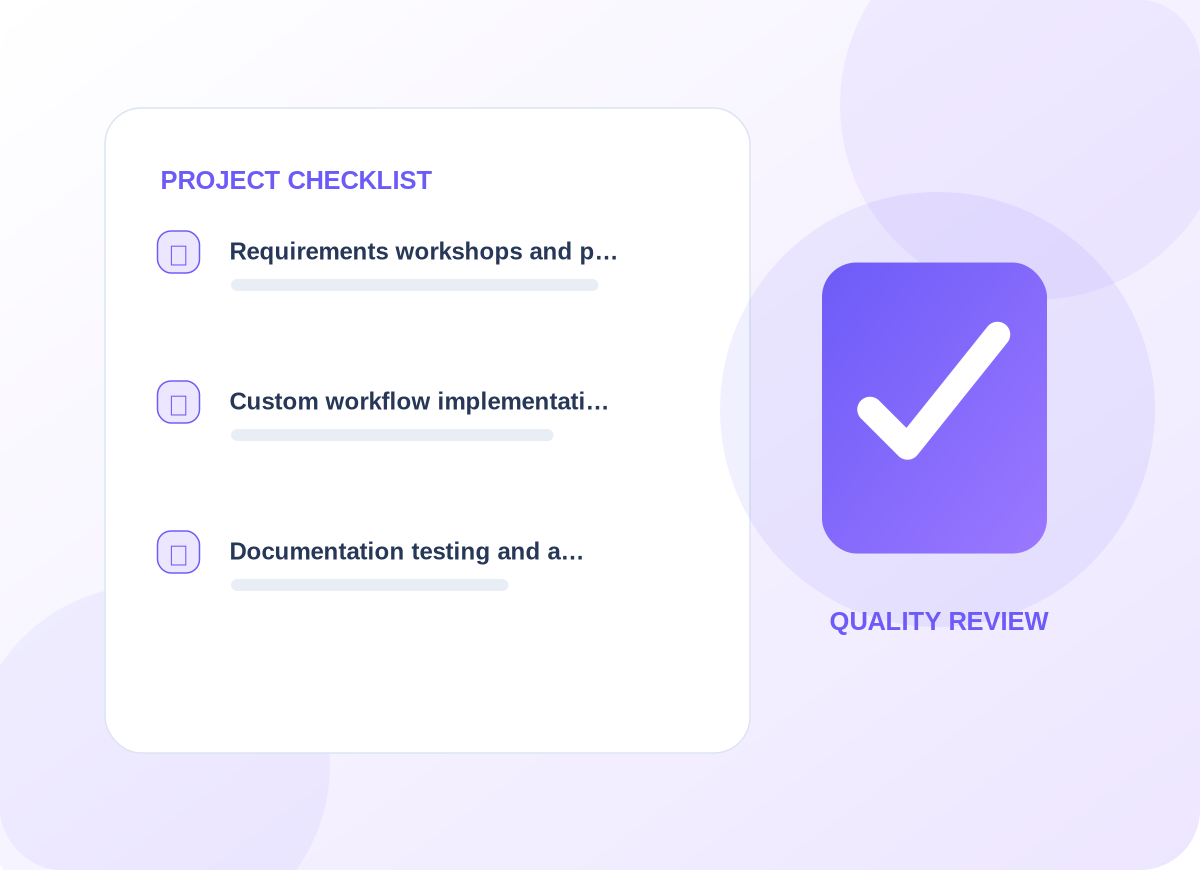
Requirements workshops and practical feature prioritization
The first design review identifies the information needed for requirements workshops and practical feature prioritization. That decision affects customer-facing wording, who maintains the information, and how a person recognizes an incomplete request. We agree examples before implementing a live workflow.
02
Custom workflow implementation with clear user roles and data models
For custom workflow implementation with clear user roles and data models, provider access and existing data are inspected before a connection is promised. We document what is read, what may change, and how a failure reaches the responsible person. The resulting process should make sense even without its diagram.
03
Documentation, testing and a maintainable release plan
With documentation, testing and a maintainable release plan, we agree a useful acceptance check and record what happens when expected information is missing. The handover explains how to review the result and who should respond to unusual cases rather than leaving them in an anonymous queue.
Project details are confirmed before delivery
How we work
Ownership matters after handover
Long-term maintenance, changing requirements, security, data ownership and backups matter as much as the first demonstration.
01
Explore the current setup
We start by asking the right people to explain their existing process and exceptions. The immediate work is to identify business constraints, data flows and what existing systems already do well. We agree who can approve changes and which user or customer interactions cannot be disrupted.
02
Design and prepare
Once the scope is clear, the delivery team works to build a focused first version with measurable acceptance criteria. Existing permissions and provider limitations are checked; any dependency not available is called out before launch instead of being presented as completed.
03
Verify before handover
Before the service is accepted, we plan to review errors, access controls, backups and a sensible improvement backlog. We document issues found in realistic scenarios and leave clear instructions for requesting changes or escalating unresolved work.
What you can expect
Practical deliverables, not a vague promise
A requirements document, prototypes, tested release, admin guidance and prioritized improvement backlog.
A project starts with defining what the software must do, not with choosing a fashionable technology stack.
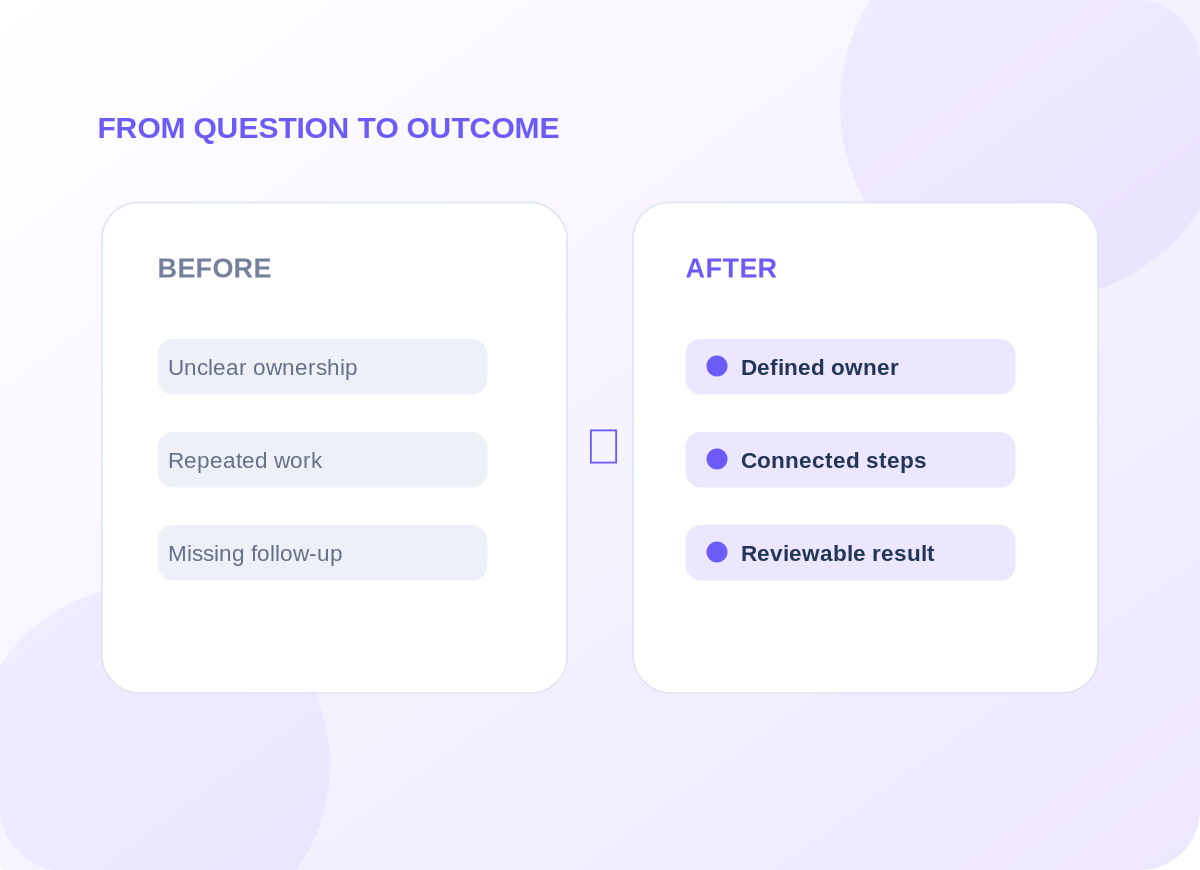
We also discuss how to observe progress using reduced manual re-entry, process errors, adoption and support workload. Those are useful review points for the agreed engagement, not claims about results that have already been achieved.
Example operational improvements to consider
Common questions
Questions worth answering before you begin
Do we need a detailed specification first?
We start with a clear problem, workflows and acceptance criteria. A small specification helps prevent disagreement about what counts as complete.
Can the software connect to existing tools?
We assess API access, export formats and permissions first. Connections to unsupported or restricted systems are not promised before technical review.
Start with a conversation
Let’s discuss your custom software development project.
Tell us about the tools you use, the work that needs improving and the constraints we should respect. We will recommend an appropriate first step.