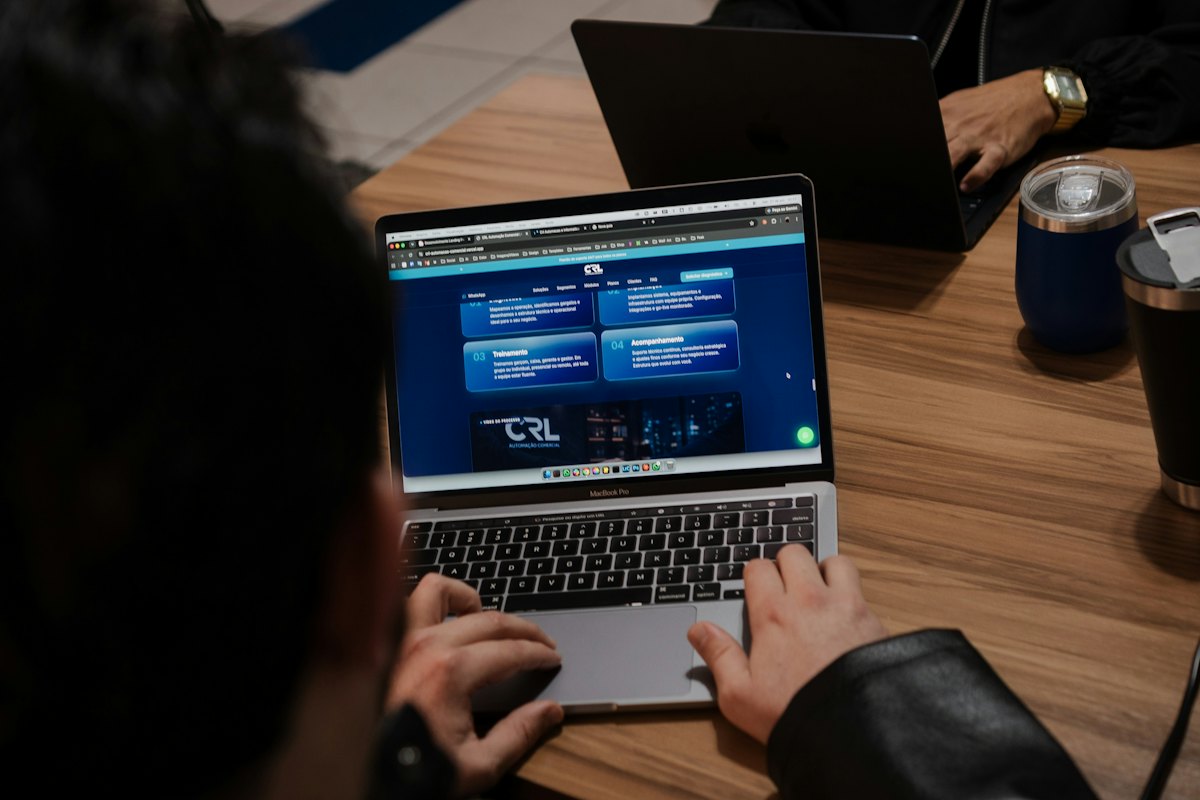
Illustrative stock photography · not a client project
Start with the real workflow
One page, one clear goal
A consulting firm offers a free assessment. Visitors should understand who it is for, what they receive, how their details will be used and what happens after submitting the form.
We structure the message, evidence, visual hierarchy, form fields, confirmation state and routing. Mobile readability and error handling are part of the design from the start.
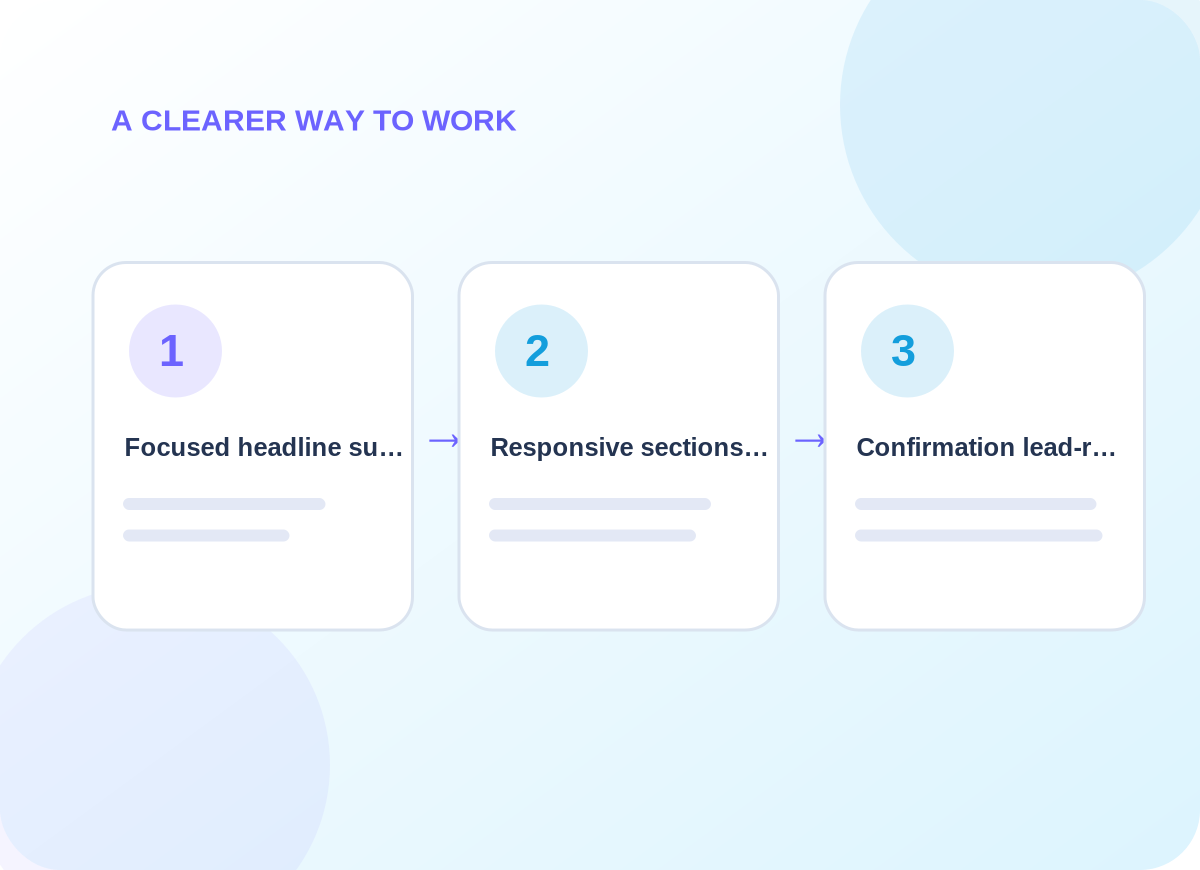
Conceptual delivery stages tailored during discovery
What is included
Reduce friction around the enquiry
Choose the capabilities that matter to your business. The final quote identifies which systems, channels and ongoing tasks are in scope.
01
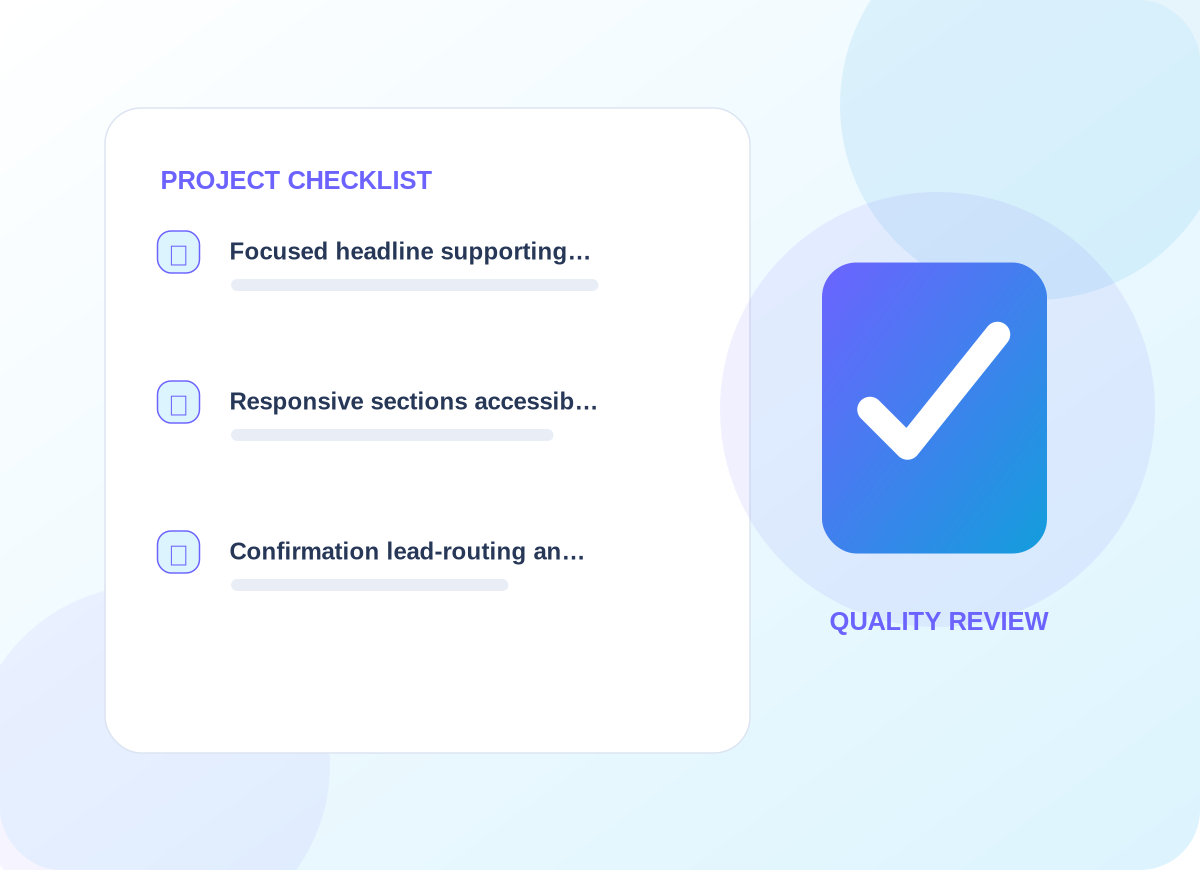
Focused headline, supporting evidence and clear call to action
The first design review identifies the information needed for focused headline, supporting evidence and clear call to action. That decision affects customer-facing wording, who maintains the information, and how a person recognizes an incomplete request. We agree examples before implementing a live workflow.
02
Responsive sections, accessible forms and trust details
For responsive sections, accessible forms and trust details, provider access and existing data are inspected before a connection is promised. We document what is read, what may change, and how a failure reaches the responsible person. The resulting process should make sense even without its diagram.
03
Confirmation, lead-routing and measurement planning
With confirmation, lead-routing and measurement planning, we agree a useful acceptance check and record what happens when expected information is missing. The handover explains how to review the result and who should respond to unusual cases rather than leaving them in an anonymous queue.
Project details are confirmed before delivery
How we work
Keep the promise connected to the form
Form submissions must reach the correct recipient, and personal data collection needs an appropriate privacy notice.
01
Explore the current setup
We start by asking the right people to explain their existing process and exceptions. The immediate work is to define a single page goal and the questions a visitor must resolve. We agree who can approve changes and which user or customer interactions cannot be disrupted.
02
Design and prepare
Once the scope is clear, the delivery team works to create wireframes and concise content before polishing visual design. Existing permissions and provider limitations are checked; any dependency not available is called out before launch instead of being presented as completed.
03
Verify before handover
Before the service is accepted, we plan to test mobile, form error states, link routing and consent copy. We document issues found in realistic scenarios and leave clear instructions for requesting changes or escalating unresolved work.
What you can expect
Practical deliverables, not a vague promise
A concise page, responsive layouts, reviewed copy, form integration plan and conversion-path checks.
Page design can support enquiries but cannot guarantee a specific conversion rate.
We also discuss how to observe progress using form completion, broken links, mobile readability and engagement. Those are useful review points for the agreed engagement, not claims about results that have already been achieved.
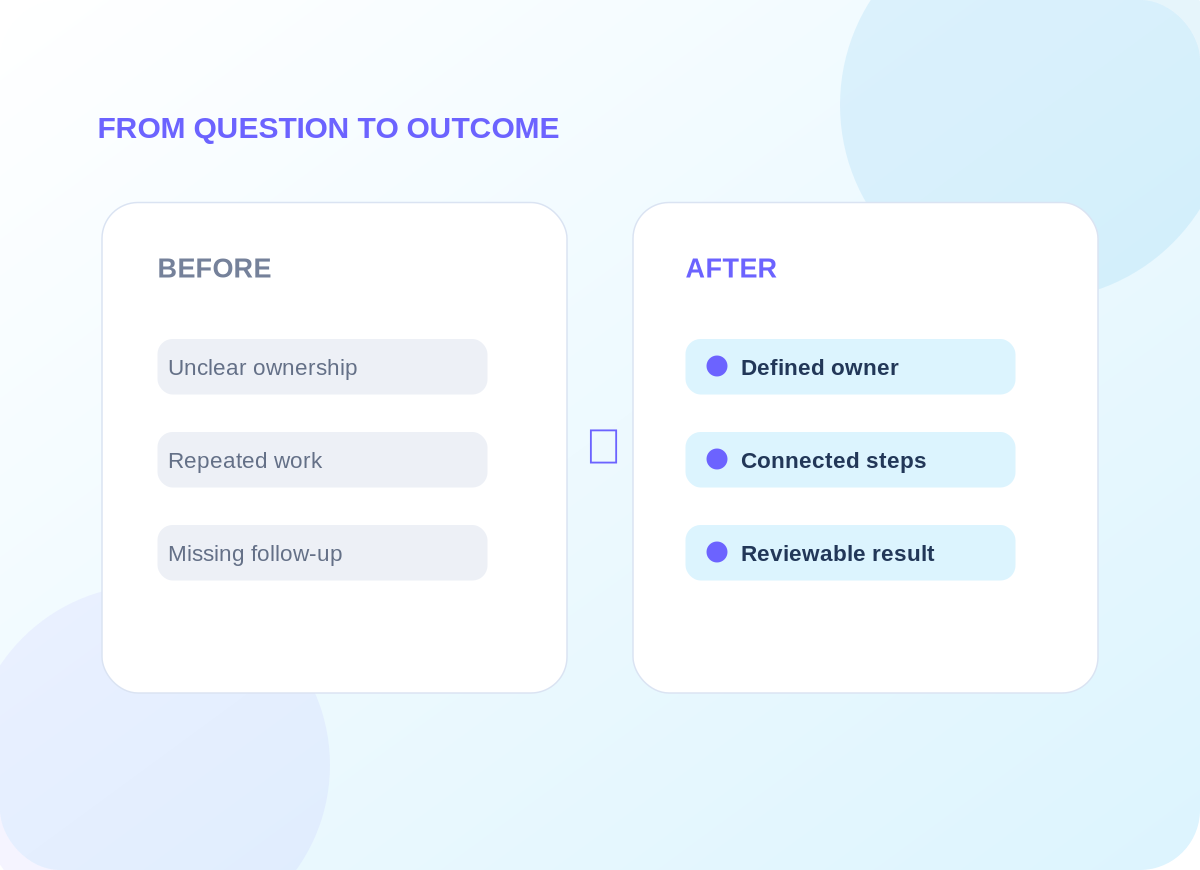
Example operational improvements to consider
Common questions
Questions worth answering before you begin
Does the service include lead-form delivery?
We plan confirmation, validation and email/CRM routing; actual delivery is tested only after the selected provider is configured.
Will the page work on mobile devices?
Responsive typography, spacing and form errors are reviewed on narrow and wide screens.
Start with a conversation
Let’s discuss your landing pages & conversion funnels project.
Tell us about the tools you use, the work that needs improving and the constraints we should respect. We will recommend an appropriate first step.