Illustrative stock photography · not a client project
The operating challenge
One place for customer requests
A request comes through email, another via website chat and a third is forwarded by sales. A defined desk categorizes each case, prevents duplicates and assigns an owner before any follow-up promise is made.
We set up queues, ticket types, macros, escalation levels, access permissions, working hours and reporting views in a supported helpdesk. The workflow should be understandable to new agents.
Conceptual delivery stages tailored during discovery
What is included
Make responsibilities obvious
Choose the capabilities that matter to your business. The final quote identifies which systems, channels and ongoing tasks are in scope.
01
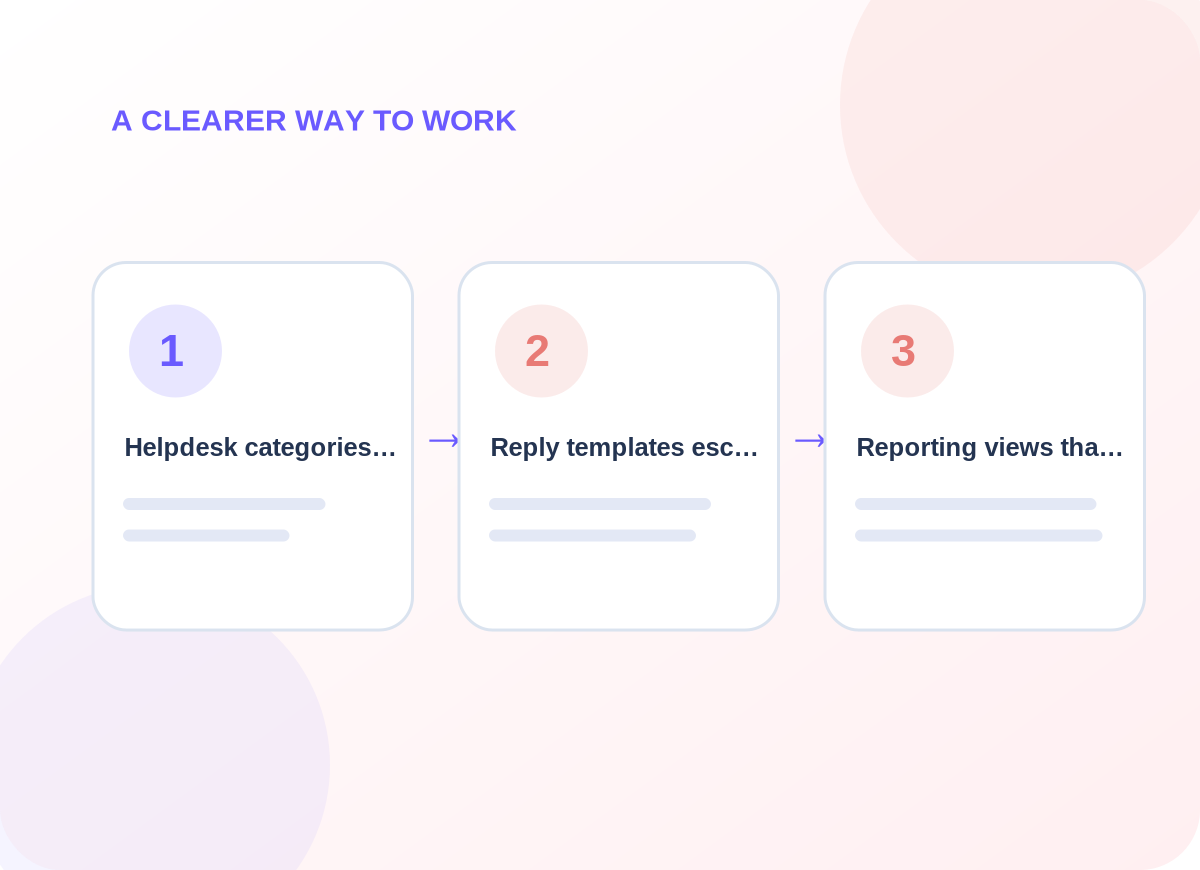
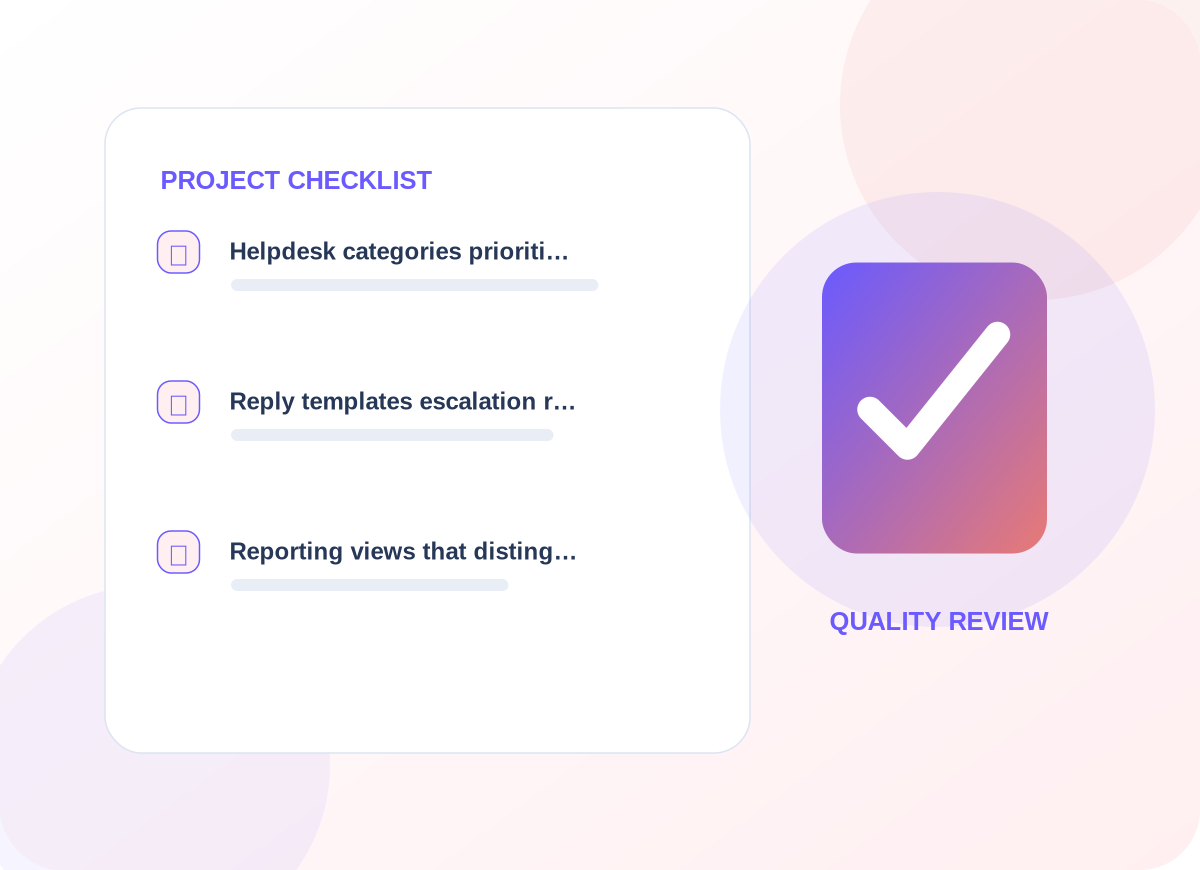
Helpdesk categories, priorities, queue ownership and service workflows
The first design review identifies the information needed for helpdesk categories, priorities, queue ownership and service workflows. That decision affects customer-facing wording, who maintains the information, and how a person recognizes an incomplete request. We agree examples before implementing a live workflow.
02
Reply templates, escalation rules and customer status updates
For reply templates, escalation rules and customer status updates, provider access and existing data are inspected before a connection is promised. We document what is read, what may change, and how a failure reaches the responsible person. The resulting process should make sense even without its diagram.
03
Reporting views that distinguish waiting on customer from waiting on team
With reporting views that distinguish waiting on customer from waiting on team, we agree a useful acceptance check and record what happens when expected information is missing. The handover explains how to review the result and who should respond to unusual cases rather than leaving them in an anonymous queue.
Project details are confirmed before delivery
How we work
A desk people can actually operate
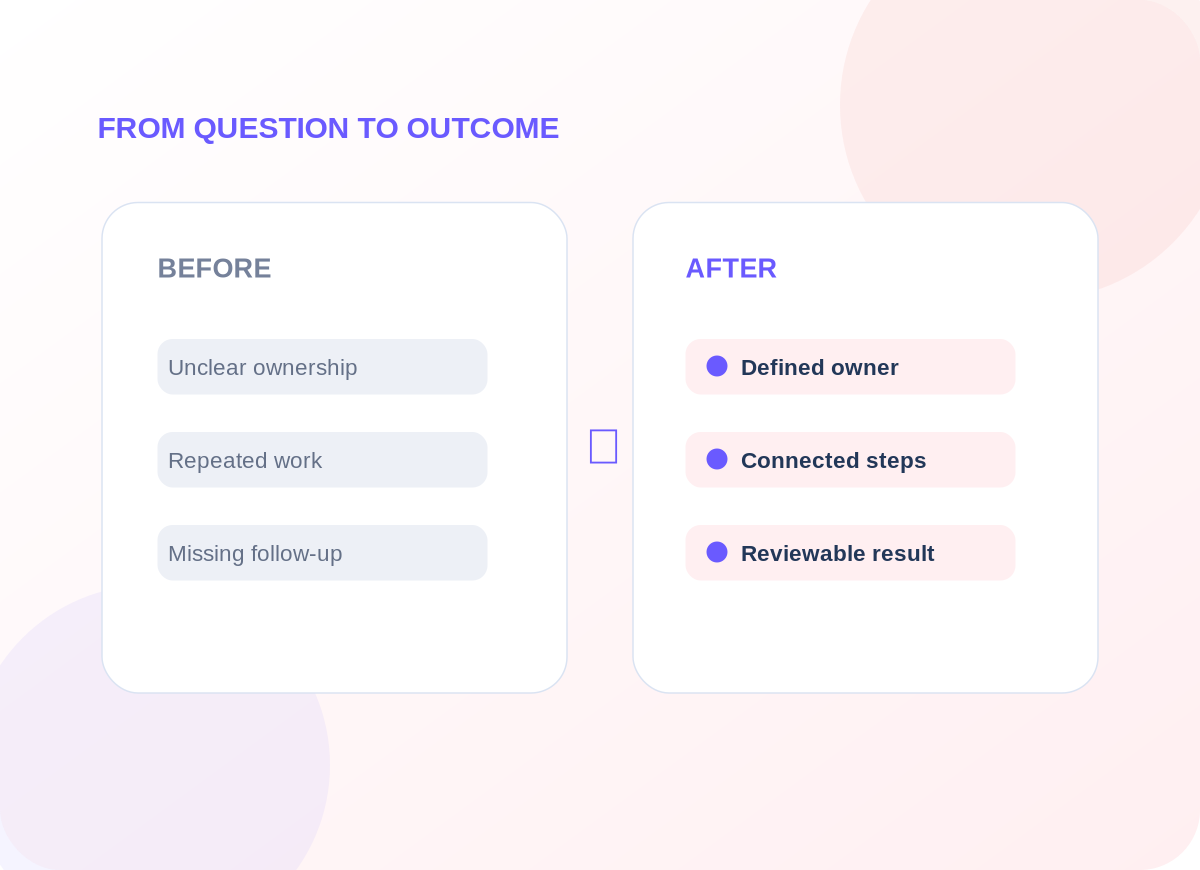
Ticket automation can hide unresolved work if statuses are unclear or customers are closed prematurely.
01
Explore the current setup
We start by asking the right people to explain their existing process and exceptions. The immediate work is to audit current channels, case types, access roles and support goals. We agree who can approve changes and which user or customer interactions cannot be disrupted.
02
Design and prepare
Once the scope is clear, the delivery team works to configure queues, ticket forms, tags, automations and permissions. Existing permissions and provider limitations are checked; any dependency not available is called out before launch instead of being presented as completed.
03
Verify before handover
Before the service is accepted, we plan to test routing, overdue cases, handoffs and quality-review reports. We document issues found in realistic scenarios and leave clear instructions for requesting changes or escalating unresolved work.
What you can expect
Practical deliverables, not a vague promise
A desk structure, ticket-state definitions, reusable responses, permissions checklist and agent handover notes.
We choose the smallest support workflow that provides clear accountability.
We also discuss how to observe progress using unassigned tickets, overdue cases, repeat contacts and documented resolutions. Those are useful review points for the agreed engagement, not claims about results that have already been achieved.
Example operational improvements to consider
Common questions
Questions worth answering before you begin
Can multiple support inboxes be consolidated?
We can plan routing from multiple approved channels into a shared queue, using tags and ownership rules to prevent cases from being overlooked.
How will agents know which tickets are urgent?
Severity definitions and escalation rules are agreed up front, with examples that agents can apply consistently under real workloads.
Start with a conversation
Let’s discuss your support desk setup & management project.
Tell us about the tools you use, the work that needs improving and the constraints we should respect. We will recommend an appropriate first step.