Customer Support & Experience / AI NexReach Services
Technical Customer Support
Initial troubleshooting, issue documentation and escalation coordination. Built for software providers needing first-line technical assistance.
A vague ticket such as “it stopped working” wastes time for both customers and engineers. Good triage gathers useful context without asking customers to perform risky changes.
Illustrative stock photography · not a client project
Start with the real workflow
Turn vague tickets into useful evidence
A user reports that a connector stopped syncing after a version update. Support gathers the version, error time, relevant logs and reproducible steps, then decides whether a documented fix applies.
We define issue categories, diagnostic questions, approved user actions, severity rules and specialist escalation requirements. Responses remain clear even when the root cause is not known.
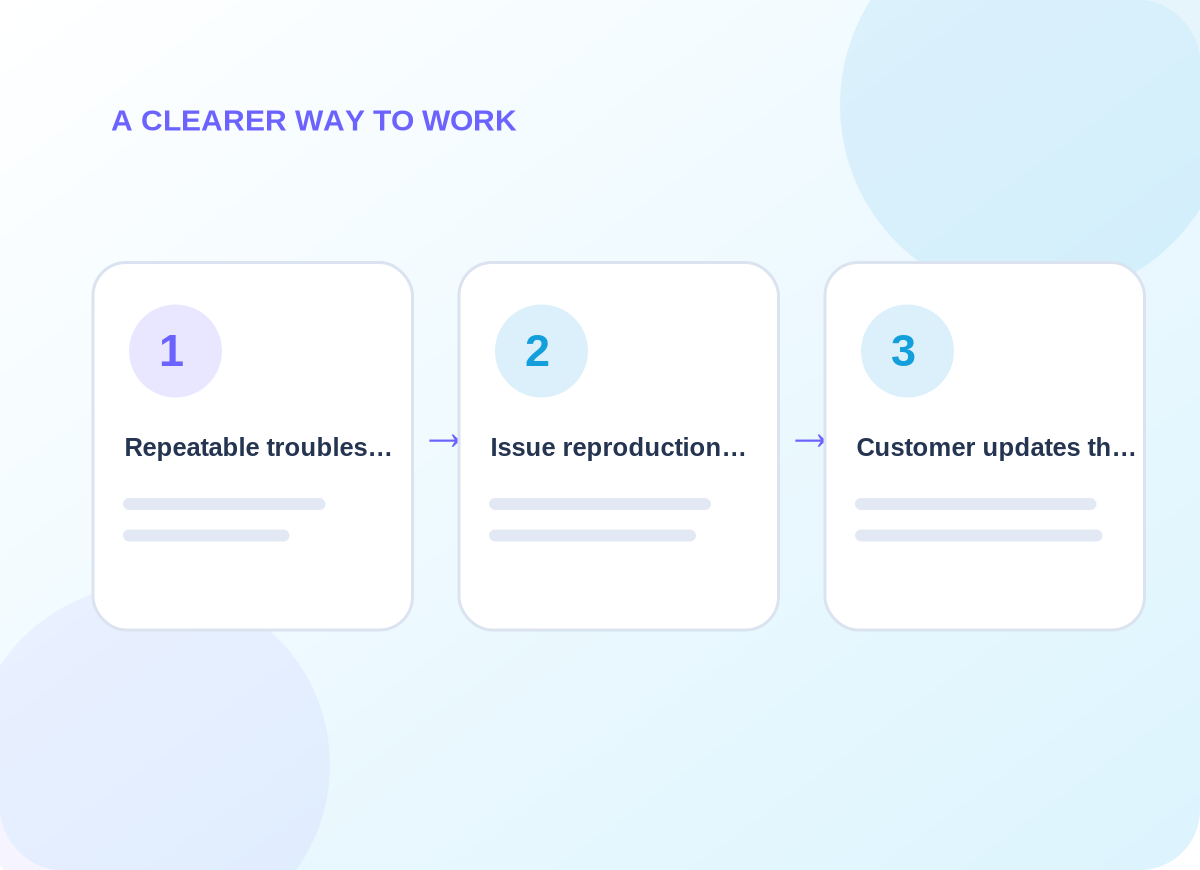
Conceptual delivery stages tailored during discovery
What is included
Support the customer and the engineering team
Choose the capabilities that matter to your business. The final quote identifies which systems, channels and ongoing tasks are in scope.
01
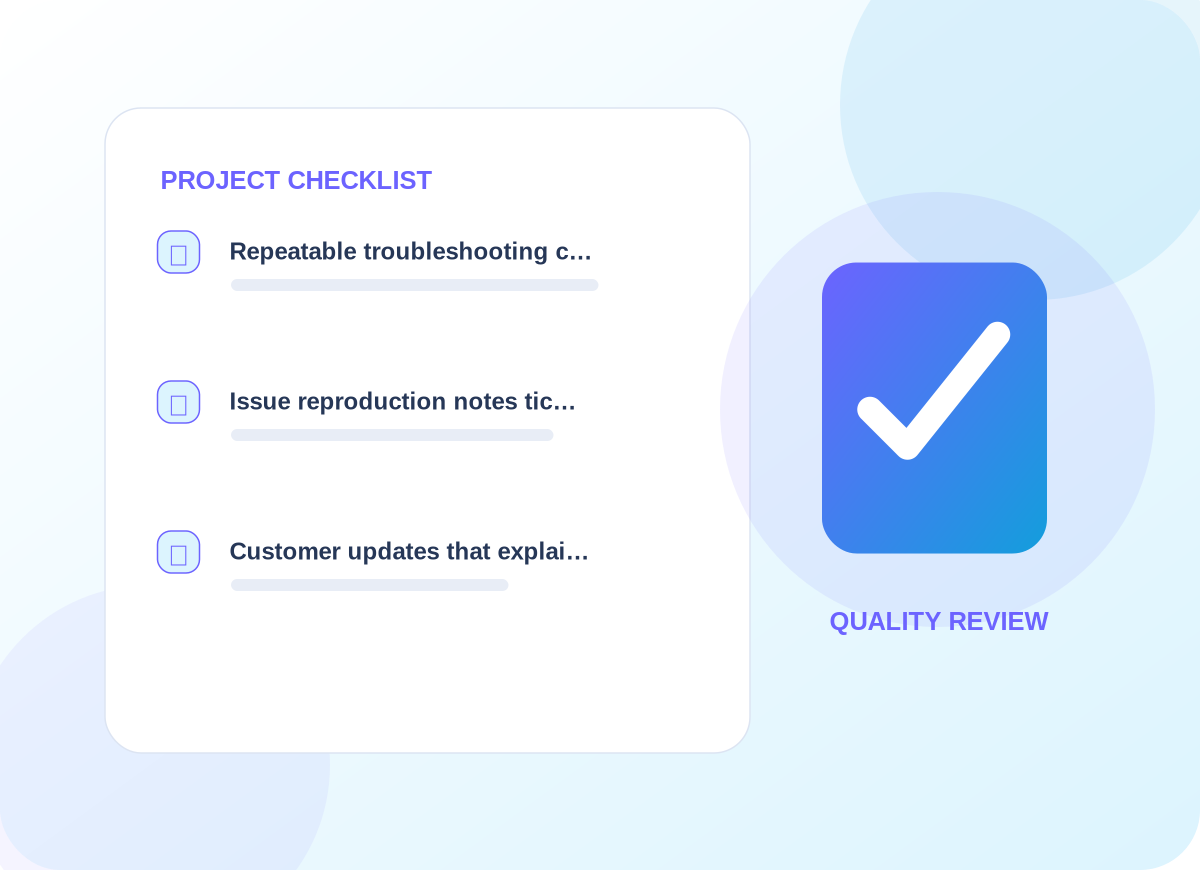
Repeatable troubleshooting checklists for defined product areas
The first design review identifies the information needed for repeatable troubleshooting checklists for defined product areas. That decision affects customer-facing wording, who maintains the information, and how a person recognizes an incomplete request. We agree examples before implementing a live workflow.
02
Issue reproduction notes, ticket categorization and escalation summaries
For issue reproduction notes, ticket categorization and escalation summaries, provider access and existing data are inspected before a connection is promised. We document what is read, what may change, and how a failure reaches the responsible person. The resulting process should make sense even without its diagram.
03
Customer updates that explain what happens next without making false promises
With customer updates that explain what happens next without making false promises, we agree a useful acceptance check and record what happens when expected information is missing. The handover explains how to review the result and who should respond to unusual cases rather than leaving them in an anonymous queue.
Project details are confirmed before delivery
How we work
Stay within safe troubleshooting boundaries
Production credentials, customer datasets and remote access require permission and strict handling procedures.
01
Explore the current setup
We start by asking the right people to explain their existing process and exceptions. The immediate work is to study the supported products, common errors and access limitations. We agree who can approve changes and which user or customer interactions cannot be disrupted.
02
Design and prepare
Once the scope is clear, the delivery team works to set triage questions and secure handling for logs and account information. Existing permissions and provider limitations are checked; any dependency not available is called out before launch instead of being presented as completed.
03
Verify before handover
Before the service is accepted, we plan to review escalations, closure notes and patterns worth documenting. We document issues found in realistic scenarios and leave clear instructions for requesting changes or escalating unresolved work.
What you can expect
Practical deliverables, not a vague promise
A diagnostic playbook, templates for escalation notes, case-update guidelines and a recurring issue review.
First-line helpdesk service is not presented as deep engineering support for systems outside the agreed scope.
We also discuss how to observe progress using complete diagnostic tickets, reopen rate, first response and escalation clarity. Those are useful review points for the agreed engagement, not claims about results that have already been achieved.
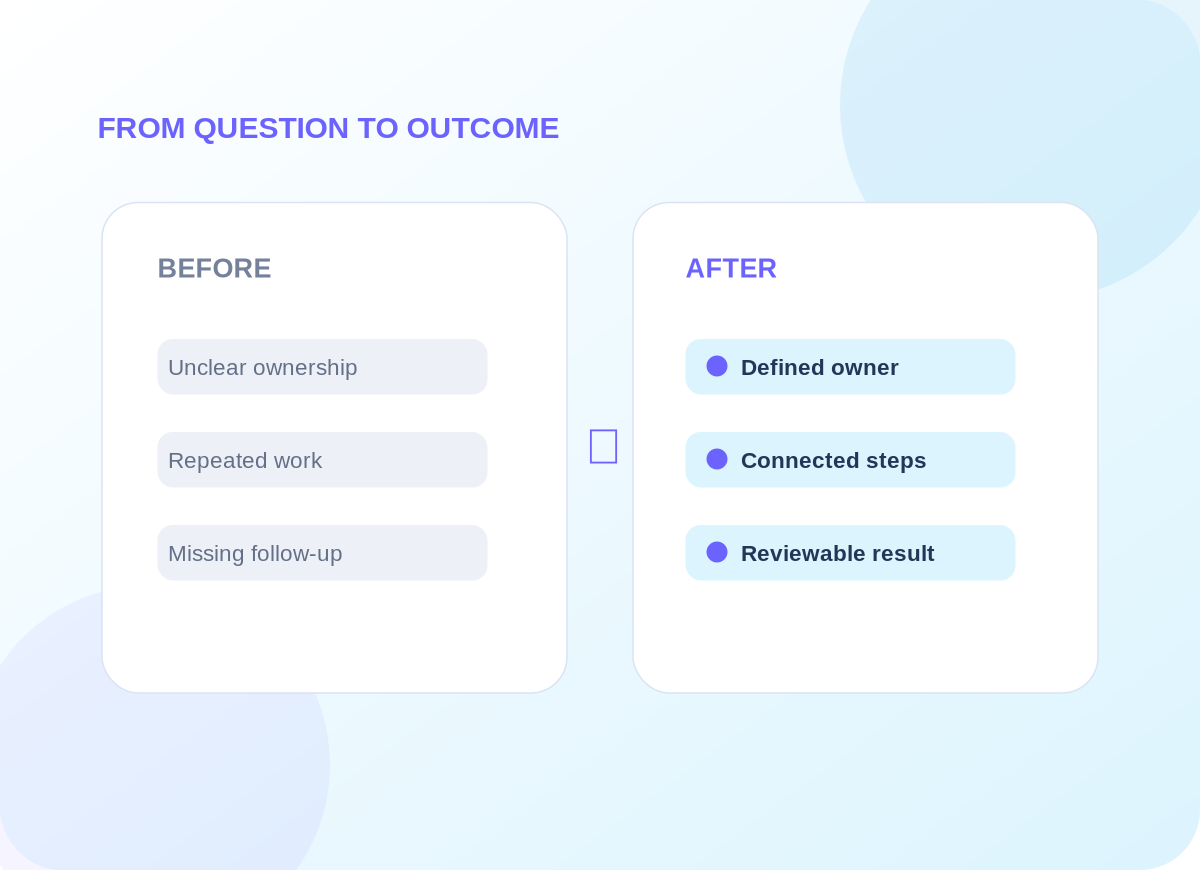
Example operational improvements to consider
Common questions
Questions worth answering before you begin
Will you make changes to production systems?
Only actions explicitly included in the support agreement and approved by the client. Deep engineering, infrastructure changes or customer production access require separate permissions.
What information should customers include in a ticket?
Useful details include product version, exact error, time of failure, expected result, relevant logs and steps already attempted—without sharing secrets.
Start with a conversation
Let’s discuss your technical customer support project.
Tell us about the tools you use, the work that needs improving and the constraints we should respect. We will recommend an appropriate first step.